
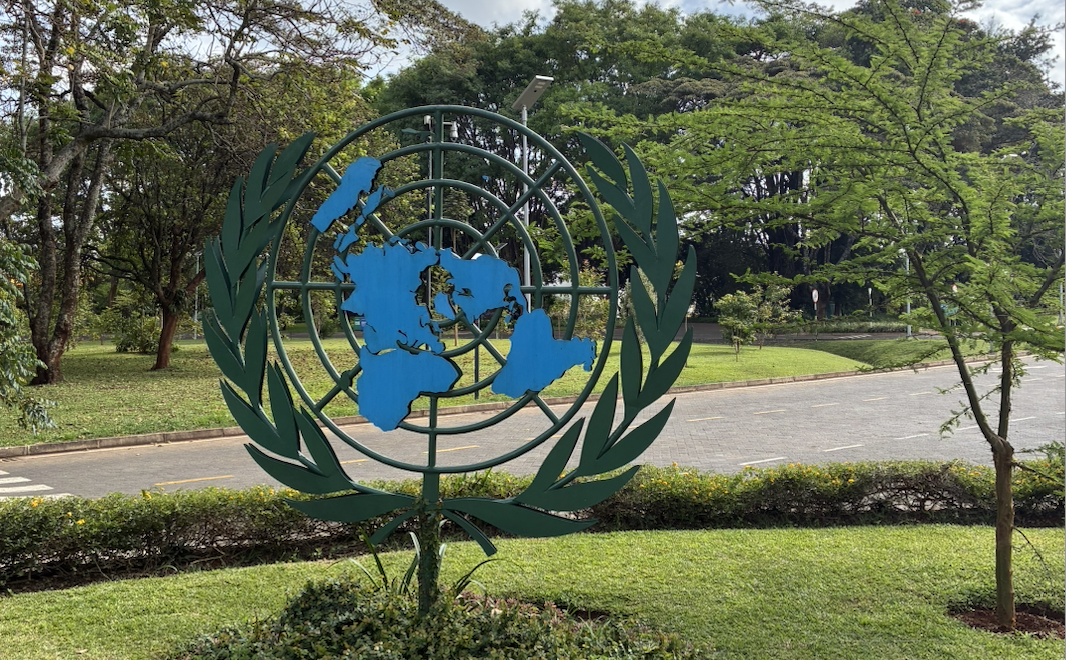
NAIROBI, November 19, 2025 — From November 10th to 19th, countries met for the third session of the intergovernmental negotiating committee (INC3) for a UN Framework Convention on International Tax Cooperation (UN Tax Convention) in Nairobi, Kenya.
Running from 2025 to mid-2027, the negotiations are set to “establish an international tax system for sustainable development,” as mandated by the UN General Assembly. This process, actively championed by civil society, has the potential to fix the global tax rules to tackle inequalities, within and between countries, and deliver hundreds of billions in public financing urgently needed for development, public services, climate action, and gender equality.
Week one of negotiations discussed the Framework Convention with negotiations beginning on the text of the legally-binding convention. Negotiators discussed commitments including taxing high-net worth individuals, ensuring a fair allocation of taxing rights, and taxation for sustainable development. Week one ended with a short presentation on taxation of cross-border services, the first early protocol. Week two discussed how to prevent and resolve tax disputes, the second early protocol.
Commenting on the third session, Dr. Dereje Alemayehu, Executive Coordinator of the Global Alliance for Tax Justice (GATJ), shared: “This was the first time that the negotiations for the international tax rules were held in Africa. This session was historic not only for the location but because of the discussions: it was the real start of the intergovernmental negotiations to negotiate new global tax rules that will create a tax system for sustainable development. Now, we are calling for ambition and substance to deliver on this opportunity.”
Tove Maria Ryding, Tax Justice Manager at Eurodad and Coordinating Committee Member of GATJ commented: “The mandate for the UN Tax Convention makes it very clear that the job is to deliver an ambitious agreement in the form of an international tax system for sustainable development. It is a big and very important task, but during the negotiations in Nairobi it became very clear that especially among some Global North countries, there is a severe lack of political will to move forward and initiate the major reforms that we need. We are now at a stage in the negotiations where the UN Member States can submit proposals for what should go into the Convention, and we’re calling on all governments to table the bold and ambitious solutions.”
Adrián Falco, Coordinator of Red de Justicia Fiscal de América Latina y el Caribe, a regional member network of GATJ, commented on the presence of civil society: “More than 100 members of civil society from around the world came to Nairobi to demand ambition in the negotiations for a UN Tax Convention because it can be the start of a new era of global tax justice. The negotiations represent a historic opportunity for governments to break with decades of paralysis in global tax governance. Ambition in this Convention is the only way to fix a system that has historically benefited the most powerful nations, tax havens and large multinational corporations.”
Everlyn Muendo, Tax Policy Lead at Tax Justice Network Africa, a regional member network of GATJ, shared: “The discussions on the commitment on fair allocation of taxing rights signals a deep desire for a change in status quo. African countries are ready to exercise their national tax sovereignty and reclaim their taxing rights particularly within the context of digital economy and cross-border services.”
Speaking upon the discussions on the second early protocol on dispute prevention and resolution, Lison Rehbinder, Global Campaigns and Policy Advocacy Coordinator – Europe at GATJ, added: “Establishing a coherent global tax system in the Framework Convention is the first necessary step to build an efficient dispute prevention and resolution system. Protocols must derive from the Convention: the priority to progress on dispute is to design a new corporate tax system under the Convention, ensuring fair allocation of taxing rights.”
Luis Moreno, Chair of GATJ added: “The current global tax architecture continues to prolong broken and obsolete tax rules. Countries must support substantive elements in the UN Tax Convention negotiations to increase transparency, end tax havens, eliminate harmful tax practices, and make multinational corporations pay where they generate their profits, thereby ensuring compliance with the financing of public policies for social and environmental protection and the fulfillment of human rights.”
Discussing the connection to COP30, Jeannie Manipon, Co-Coordinator of Tax and Fiscal Justice Asia and Coordinating Committee Member of GATJ shared: “Having taken place in parallel to the Belém COP30 climate negotiations which are looking for public finance, the UN Tax Convention negotiations must be ambitious and deliver their mandate of developing an international tax system for sustainable development so that countries recover the billions lost to tax abuse and fund climate action and the just transition.”
Speaking on the importance of gender-responsive taxation, Maureen Mburu, Tax and Gender Lead and Africa Campaigns Coordinator at GATJ, added: “The losses from tax abuse under the current global tax rules force countries to rely on regressive taxes that fall heaviest on women and marginalized communities. Now, as countries continue to develop commitments, we need ambition to deliver on the mandate of the UN Tax Convention to ensure a system for sustainable development. This is essential to reverse the present injustices and ensure tax systems reduce, rather than reproduce, gender inequality.”
–
Ends
Media Contact: Alexandra Wenzel, GATJ Global Communications Coordinator, +41 77 813 37 32 (WhatsApp), [email protected]
For more information on the negotiations:
- From 2025 to mid-2027, countries are negotiating a UN Tax Convention and two early protocols. The Terms of Reference for the UN Tax Convention and two early protocols is here. In August, countries met in New York for the initial two sessions.
- In the first week of the negotiations, delegates discussed the text of the commitments under the framework convention based on the Co-Lead’s Draft Framework Convention. In response to this draft released on October 24th, a broad coalition of civil society and trade unions coordinated by the Global Alliance for Tax Justice shared a joint response.
- Civil society has called for ambition in the written inputs that governments and stakeholders are now invited to make until December 5th. More details on the submissions can be found on the UN webpage.