
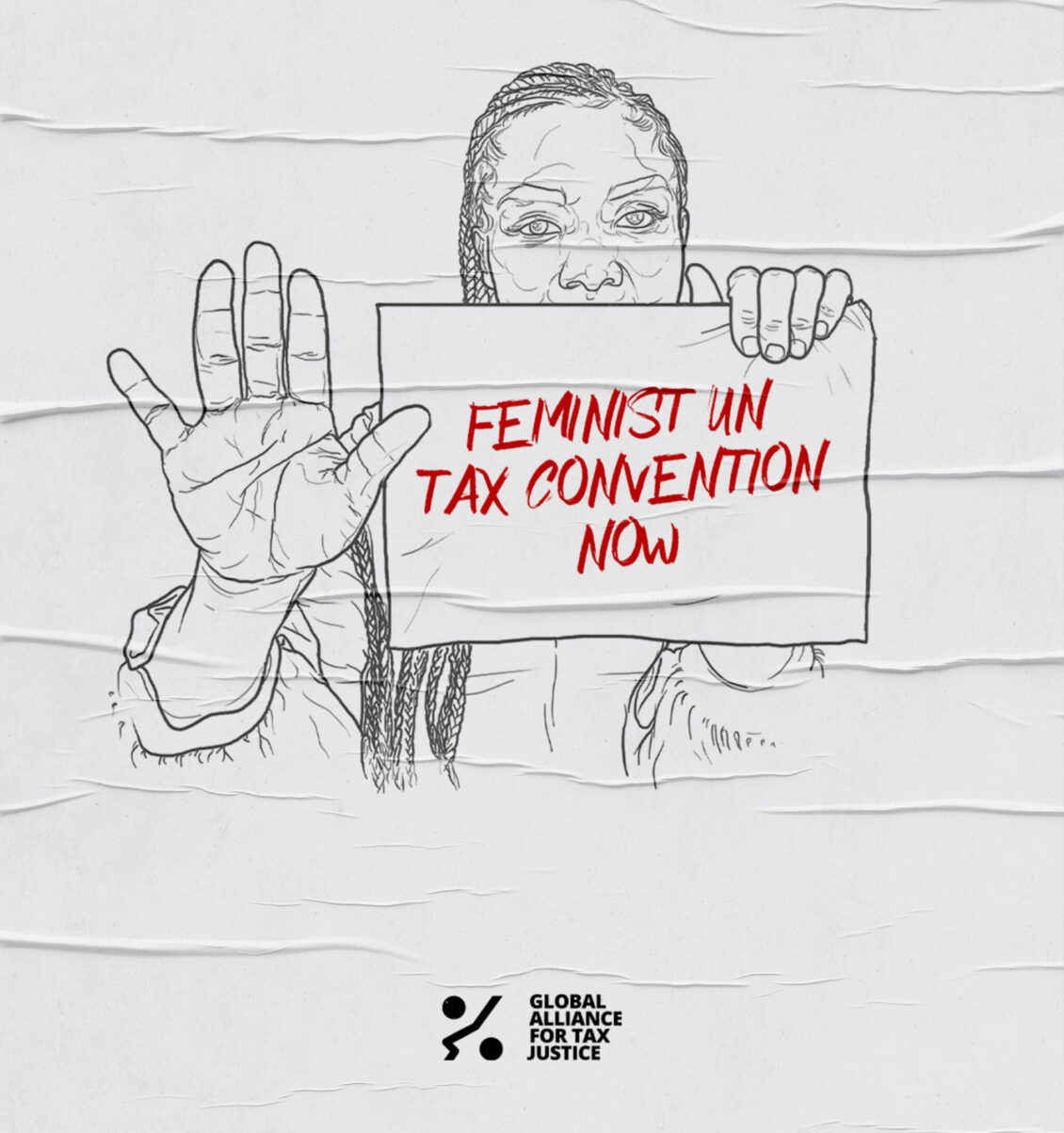
From Beijing to Seville, states have long promised gender-responsive fiscal policies, the UN Tax Convention is their chance to deliver.
By: Jennifer Lipenga, Tax and Gender Equality Policy Advisor at ActionAid International
It has been more than three decades since the adoption of the Beijing Declaration and Platform for Action at the United Nations (UN), one of the most comprehensive and transformative global agendas for the achievement of gender equality made possible through the relentless organizing of feminist and women’s rights movements. In the Beijing Declaration and Platform for Action, states committed to advancing gender equality as a core fiscal and economic obligation. They agreed to integrate a gender perspective into the development of policies and programmes, including macroeconomic policy and resource allocation (1). Crucially, they committed to ensure that adequate resources are mobilized at both national and international levels to advance women’s rights, and to review and modify macroeconomic policies, including taxation, wherever they have harmful gendered impacts (2). These commitments built on the foundation of the Convention on the Elimination of All Forms of Discrimination Against Women (CEDAW) adopted by the UN, which legally obliges states to take all appropriate measures to eliminate discrimination against women and guarantee substantive equality.
And yet, since the beginning of the negotiations of the UN Framework Convention on International Tax Cooperation (UN Tax Convention) in 2023, a process widely described as historic and capable of reshaping global tax governance, the commitments made in Beijing appear dangerously absent. But this is precisely how patriarchy operates within global economic governance: by framing deeply political fiscal choices as neutral, technical matters beyond public accountability and structural critique.
Arguments that tax policy is gender-neutral mirror the long-standing narrative that economic policy itself is neutral. It is the same logic that has pushed care to the margins of macroeconomic decision-making, as though the global economy does not rely on women’s unpaid and underpaid labour to function. As though social reproduction is not the invisible infrastructure sustaining markets, corporations, states, and the very conditions of life for people and the planet. Tax systems today reflect a continuation of colonial extraction, designed within flawed economic models that assume an endless supply of women’s unpaid and domestic care. They are further shaped by labour market inequalities, wage gaps, and resource ownership disparities, while reliance on consumption taxes disproportionately burdens women and other structurally marginalized groups. They also allow multinational corporations and wealthy individuals to escape from paying their fair share of taxes through profit shifting and lobbying for tax incentives such as tax holidays. African countries alone lose at least $88.6 billion every year in illicit financial outflows, largely owing to aggressive tax avoidance by the wealthiest companies and individuals. This level of excessive corporate tax abuse has massively contributed to shrinking fiscal space needed to finance gender-responsive public services such as healthcare, education, water and childcare, the very services that reduce and redistribute unpaid care work.
Assumptions based on the expectation that women will fill the gap with their unpaid care work. To suggest that gender equality is not central to tax justice is therefore not just a technical oversight. It reflects deeply interwoven systems of patriarchy, capitalism, and neoliberalism that separate ‘economic policy’ from ‘social justice’ even though they are inseparable, as we are witnessing the UNTC negotiations where some member states are arguing that gender equality should not be discussed within that space.
Transforming Tax Rules Without Transforming Power?
The UN Tax Convention presents a real opportunity to rewrite global tax rules that continue to enforce patterns of colonial extraction. Existing rules have been formulated by the Organisation for Economic Co-operation and Development (OECD), a club of rich countries, and enabled the systematic outflow of wealth from the Global South to the Global North through profit shifting and tax treaties that limit source-based taxing rights (3). The UN Tax Convention is therefore presenting a historic opportunity to build a new global order where progressive tax systems actually sustain societies. But who is it sustaining?
The UN Tax Convention cannot simply redistribute taxing rights between countries while leaving gender hierarchies intact. It must confront the gendered foundations of the global economy itself. It must move beyond technocratic reform toward structural transformation. This means explicitly embedding a feminist rights-based approach into both the negotiation process and the text itself. It means acknowledging that care work, both paid, unpaid and underpaid sustains markets and states. It means designing rules that expand fiscal space for investments in gender-responsive public services and care infrastructure. Most importantly, it means rejecting neoliberal logic that prioritizes profit over human and planetary well-being.
The current global context, marked by the rollback of gender equality and women’s rights in many regions, calls on us to be bold in demanding systems to change. We cannot afford another global agreement where gender equality is referenced rhetorically but excluded structurally. If the UN Tax Convention is to take us into a new world order, it must be truly feminist in substance, not symbolic in language. This is an opportunity for states to demonstrate that their actions are in the benefit of over 50% of their populations and that their commitments under the Beijing Declaration and Platform for Action and CEDAW were not rhetorical and that the promises reiterated in subsequent global agreements were not simply performative gestures. This includes those most recently made in the Compromiso de Sevilla adopted by the Heads of States – the highest representatives of governments- at the Fourth International Conference on Financing for Development (2025), where states reaffirmed their commitment to promote gender-response solutions across the financing for development agenda.
Governments’ commitments to gender equality as a core human right must therefore be reflected in the rules and design of international tax cooperation. Especially at this time of backlash for women’s rights, the UN Tax Convention cannot become another cycle of aspirational language detached from fiscal reality. If states are serious about transforming global economic governance, then gender equality must be structurally embedded in the UN Tax Convention, not appended at the end.
A Feminist UN Tax Convention NOW!
Feminists and women’s rights organizations through the Tax and Gender Working Group (TGWG) of the Global Alliance for Tax Justice (GATJ) have for many years been calling for tax policy to deliver on women’s rights and gender equality commitments. This has been at the heart of the #MakeTaxesWorkForWomen global campaign. The TGWG has also been actively engaging in the negotiations, advancing a clear vision for a Feminist UN Tax Convention. We are putting forward substantive proposals that would ensure the Convention advances substantive gender equality and does not undermine it. Our collective submissions set out concrete proposals for embedding feminist, rights-based approaches into the foundations of international tax cooperation. These include taxing high-net-worth individuals; ensuring a fair and equitable allocation of taxing rights through formulary apportionment; strengthening progressive taxation; curbing corporate tax abuse; and expanding fiscal space to finance gender-responsive public services and care systems. The UN Tax Convention is the trillion-dollar opportunity for governments to finally align global tax rules with their commitments to gender equality and women’s rights.
__
1 United Nations, Beijing Declaration and Platform for Action, adopted at the Fourth World Conference on Women, 15 September 1995, Strategic Objective F.1, Action (p): “Use gender-impact analyses in the development of macro- and micro-economic and social policies in order to monitor such impact and restructure policies in cases where harmful impact occurs”
2 United Nations, Beijing Declaration and Platform for Action, adopted at the Fourth World Conference on Women, 15 September 1995, Strategic Objective A.1 (b): “Analyse, from a gender perspective, policies and programmes – including those related to macroeconomic stability, structural adjustment, external debt problems taxation, investments, employment, markets and all relevant sectors of the economy – with respect to their impact on poverty, on inequality and particularly on women; assess their impact on family well-being and conditions and adjust them, as appropriate, to promote more equitable distribution of productive assets, wealth, opportunities, income and services”
3 Developing countries enter bilateral tax treaties to eliminate double taxation, attract foreign investment, reduce tax avoidance, and strengthen participation in the global economy. These treaties allocate taxing
rights between residence countries (where investors are based) and source countries (where income is generated). As developing countries are primarily source jurisdictions, they depend heavily on source-based taxation; however, tax treaties often favour residence countries by limiting source-country taxation, particularly on passive income such as dividends, interest, and royalties.