
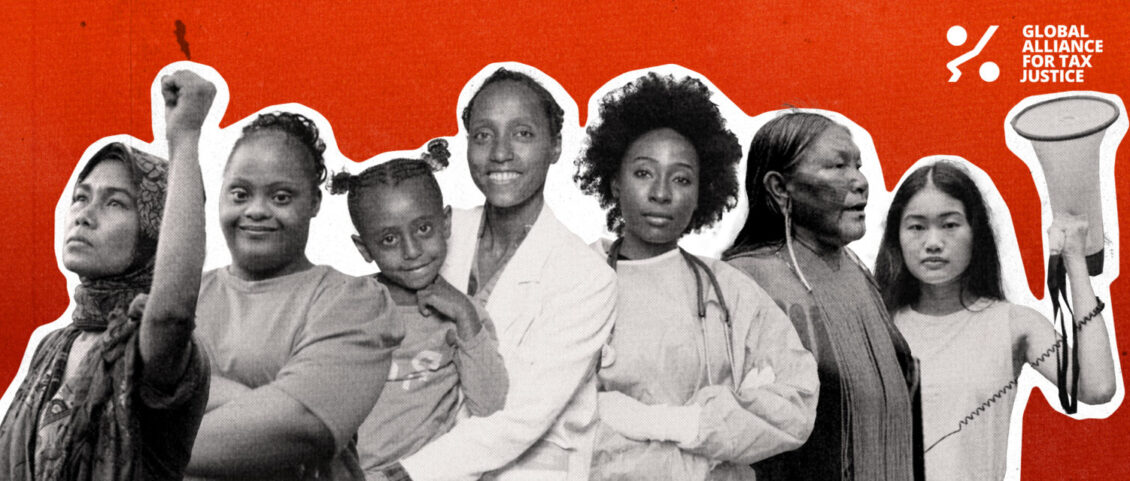
Marking the 2025 International Day of Care and Support under the theme of “Care and Support for All – Addressing all rights-holders, including those providing and receiving care and support .”
By: Maureen Mburu, GATJ Tax and Gender Lead and Africa Campaigns Coordinator
The 2025 International Day of Care and Support calls on the world to recognise that care and support for all is a shared human right and the foundation of just, inclusive societies.
Yet this transformation cannot happen without tax justice. To build equitable care systems, governments must implement the tax and fiscal frameworks that make public investment in care possible and sustainable. This means moving beyond rhetoric about valuing care to financing it through fair and progressive taxation.
Transforming care systems requires transforming the way we generate and allocate public resources. A care-centred society requires on tax systems that redistribute wealth, reduce inequality, and provide governments with the fiscal space to guarantee universal access to care services as a public good.
Why Care Matters for Economic Justice
Care is the invisible infrastructure that sustains life, communities, and economies. It enables people to learn, work, and thrive. Yet, care remains systematically undervalued. In fact, according to ILO estimates, if unpaid care work were assigned a monetary value, it would contribute between 10% and 39% of GDP, depending on the country.
Despite its vital contribution, care work is rarely treated as an investment. Instead, governments’ fiscal and tax priorities continue to privilege profit-driven sectors while cutting social spending. The lack of public investment in care undermines gender equality and stalls progress on nearly every Sustainable Development Goal.
To truly transform care systems, we must first transform how we value and finance care. Care is not a private burden, but a public good and a human right.
The Care Crisis in Tax Policy
The current global tax rules reflect decades of regressive policies. Governments have cut taxes for the wealthiest and multinational corporations, shrinking the budgets needed to finance essential public services. In turn, governments rely heavily on consumption taxes, such as value-added taxes (VAT), which disproportionately affect women, gender-diverse, and low-income households.
For women, particularly those in the informal sector, this means paying more and receiving less. Daily spending on food, fuel, and basic goods incurs taxes, while public care services that could relieve their unpaid workload remain underfunded and increasingly privatised.
Particularly in the Global South, governments are forced to choose between repaying debt and investing in care. Too often, debt wins. Under crushing debt repayments and austerity measures, public budgets are drained while hospitals, schools, and care systems crumble. These cuts hit women and girls the hardest, stripping away vital services and forcing women to fill the gaps through unpaid care work. Every dollar spent servicing unjust debt is a dollar taken from childcare, healthcare, and the people who hold our communities together.
It is time to break this cycle. Governments must treat care as a public good, end austerity, and reclaim their fiscal space through a fair international financial architecture. True economic recovery means investing in people, not punishing them.
Tax Justice For Care
As the world marks the 2025 International Day of Care and Support, it is time to connect care with tax justice. Without effective and progressive taxation, the transformation of care systems will remain out of reach.
In the Framing Feminist Taxation Guides I and II, tax and gender experts outline key recommendations for governments. Nationally, governments must ensure progressive, gender-transformative tax policies that adequately fund care systems to enable all people to live and work in dignity.
At the international level, the ongoing negotiations for a UN Framework Convention on International Tax Cooperation are a historic opportunity to enable governments to recover billions in lost tax revenues and sustainably finance care. Through these negotiations, governments must stop tax abuse and illicit financial flows, ensuring that the richest and biggest multinational corporations pay their share. Concerningly, gender has been absent from these negotiations. At the next session of negotiations from November 10th to 19th, governments must ensure that gender provisions are in the framework convention.
Transforming care systems is not just about recognising the value of care, it is about financing it.